Fasting Friends of the Bridegroom During Holy Week
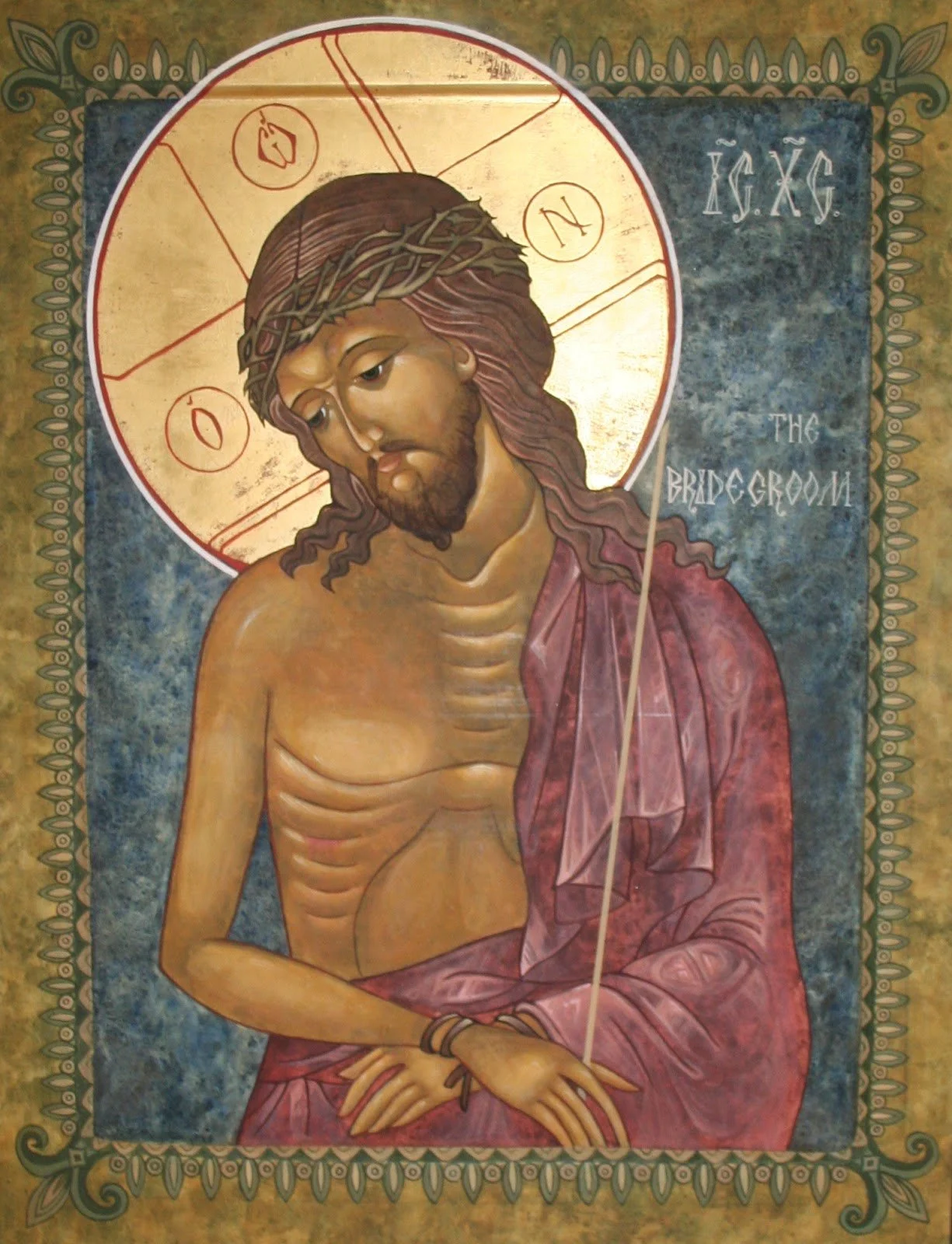
Icon of Christ the Bridegroom. January 16, 1084. Author unknown. https://commons.wikimedia.org/wiki/File:Christ_the_Bridegroom_Icon.jpg
St. Dominic left little by way of written word, which makes his May 1220 letter to the Madrid Dominican sisters a tiny treasure. In it, he exhorts the sisters:
Fight the good fight, my daughters, against our ancient foe, fight him insistently with fasting, because no one will win the crown of victory without engaging in the contest in the proper way.
During this Holy Week, I think we should embrace St. Dominic’s exhortation to fast as being directed to us, and do more than the minimum.
The Sixth Rule of Lay Dominicans echoes St. Dominic and points to a hidden source of strength to prayer and preaching. But the line is easy to overlook in the middle of Paragraph 10 of the Rule, which refers to the “chief sources from which the lay members of St. Dominic draw strength to advance in their proper vocation.” In the list of chief sources is “conversion of heart according to the spirit and practice of evangelical penance.” (Sixth Rule, Par. 10.e. (emphasis added).) Paragraph 10.e. in the Rule is key: conversion of heart through evangelical penance.
Paramount to evangelical penance is fasting. The Gospel according to St. Matthew informs us that Our Lord’s vision of how His followers are to live includes fasting: “When you fast ….” Matthew 6:16-17. Note that it was not a matter of whether we fast, but when we fast. He assumed the necessity of fasting by ignoring any notion of “if.” It is not an if; rather, it is when. And when is it that Jesus’ followers would fast? “[W]hen the bridegroom is taken away from them, . . . then they will fast.” Matthew 9:15. And why does Jesus speak of fasting as something fundamental for His followers, and the Dominican Rule speak of evangelical penance as a chief source from which to “draw strength”? Because there is a power in fasting not found elsewhere. “This kind [of demon] can go out by nothing, but by prayer and fasting.” Mark 9:28. Prayer is buttressed by fasting and preaching made effective because fasting involves a conversion of heart, one immersed in humility that recognizes and invokes the almighty power of God. It recognizes that we are powerless of ourselves. It empties us of all that is not Him, and enkindles a desire for Him, for ourselves and others. It purifies, orders the will, and quiets our lower appetites. Fasting makes us powerful because it transforms us into living holocausts before the throne of God.
The Lay Dominican Rule speaks of Lay Dominicans sharing in the Order’s “apostolic mission, by study, prayer and preaching according to the state proper to lay persons.” That sharing is founded in evangelical penance, as seen above, and is reinforced by prior iterations of the Lay Dominican Rule. For example, the First Rule instructed that members were to fast daily from the first Sunday of Advent until Christmas, and again from Quinquagesima Sunday until Easter, and also every Friday throughout the year. (Ch. XII.) The 1923 Rule prescribed fasts and abstinences on the vigils of the Holy Rosary, St. Dominic, St. Catherine, and exhorted members to fast on all Fridays. (Ch. VIII.) The 1923 Rule’s Chapter VIII on fasting was placed before the chapters on active works and preaching. The logic in the layout is clear. Preaching is lifeless if one’s heart has not been converted in penance.
The current Lay Dominican Rule’s layout has a similarity in that it describes “evangelical penance,” which includes fasting, as a “chief source.” We all want power in our spiritual lives, our example, our words. The vitality lies in our union with Jesus, and the Rule points to a fundamental truth of that union, which is that hearts (ours and others) must be converted through evangelical penance, what Our Lord instructed that we embrace.
“The time will come when the friends of the Bridegroom will fast ….”
Holy Week - it’s time.
-Anthony Alt

